Commercial steam ice dam extraction and emergency roof leak tarping in Minneapolis, MN
Field Technician Operating Commercial Low-Pressure Steam Boiler for Zero-Trauma Ice Dam Removal in Minneapolis, Minnesota.

Twin Cities Emergency Damage Triage Matrix

Select your immediate roof failure scenario below to view recommended tactical protocols, required mobilization assets, and direct phone-to-crew connection options.

Winter Threat Critical Triage

Massive Eave Ice Dam Back-Up

Snow melt pools behind thick gutter ice ridges, breaching nail penetrations and saturating ceiling drywall across cathedral ceilings and exterior walls.

Tactical Protocol:
  • Commercial boiler low-pressure steam cuts channels through ice ridges.
  • FLIR thermal moisture tracking across ceiling drywall and rafter bays.
  • Interior containment and structural water extraction.
Dispatch Steaming Unit: (888) 208-4155
Hail Belt Threat Severe Impact

Supercell Hail Bruises & Punctures

1.75" to 2.75"+ hail stones fracture asphalt fiberglass mats, shatter brittle ridge caps, and crush soft aluminum box vents, leaving open paths for wind-driven rain.

Tactical Protocol:
  • High-resolution 4K photographic grid and 10x10 test square documentation.
  • Emergency mastics and self-adhering tape patches over fractured shingles.
  • Complete insurance claim scope preparation for adjuster presentation.
Dispatch Hail Specialist: (888) 208-4155
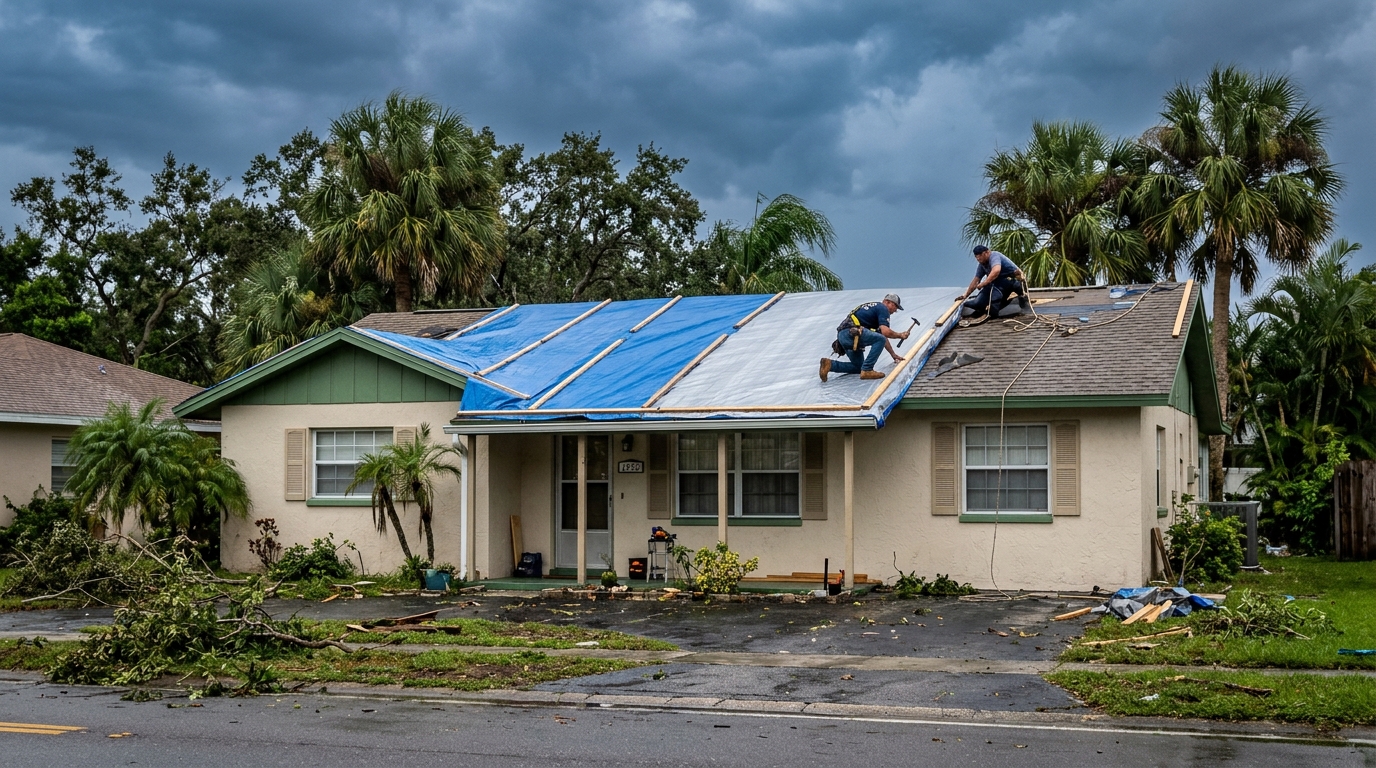
Storm Blow-Off Immediate Tarp

Exposed Plywood Deck Blow-Off

Violent 65+ mph prairie winds strip weathered shingle tabs, exposing bare OSB or plywood sheathing to sudden secondary moisture rot and insulation saturation.

Tactical Protocol:
  • Heavy 10-mil woven UV-treated poly membrane anchored over ridge.
  • Continuous 2x4 kiln-dried wood battens screwed through rafter trusses.
  • Perimeter edge turn-downs to eliminate wind catching beneath tarp edges.
Request Emergency Tarping: (888) 208-4155

Twin Cities Microclimate Dynamics: The Double Threat of Summer Hail Belts & Sub-Zero Ice Dams

The Minneapolis–St. Paul metropolitan area occupies a uniquely volatile climatic crossroad in North America. Situated in east-central Minnesota within the Upper Mississippi River Valley, the Twin Cities experience severe continental climate extremes. Winters bring relentless sub-zero Arctic vortex air masses dipping to -20°F to -30°F with 50 to 65+ inches of annual snowfall. Conversely, summers generate intense convective instability, propelling the region into one of the most active severe hail corridors in the United States.

This dual-season meteorological severity exerts punishing structural forces on residential and commercial roof assemblies across Hennepin and Ramsey counties. During prolonged winter freezes, heat escaping through unsealed attic bypasses (such as recessed light fixtures, plumbing chases, and attic access hatches) warms the underside of roof sheathing. Snow melts on upper roof planes and trickles down to colder eaves and gutters that overhang outside the exterior heated wall line. Upon hitting the sub-freezing eave, the water rapidly freezes into thick solid ice dams. As melting continues, water pools behind the ice barrier and is forced backward beneath shingles via capillary action and hydrostatic pressure.

In late spring and summer, convective supercells sweeping off the western plains unleash destructive straight-line winds and baseball-sized hail strikes across western suburbs like Plymouth, Maple Grove, and Minnetonka. Hail stones impacting asphalt shingles at terminal velocities exceed the elastic threshold of aged fiberglass reinforcing mats. This causes severe circular fractures, deep bruising, and wholesale loss of protective mineral granules. Once the granules are stripped, solar ultraviolet radiation rapidly oxidizes the exposed asphalt bitumen, degrading roof longevity and leading to rapid water penetration during the next thunderstorm.

FLIR Infrared Thermal Tracing & Non-Destructive Moisture Mapping

Water intrusion in Minnesota homes rarely travels in a straight vertical line. Snow melt penetrating an eave shingle in Minnetonka or Edina may travel 15 to 25 feet along diagonal structural rafters, vapor barrier poly layers, or HVAC ductwork before dripping through a living room ceiling fixture. Traditional exploratory drywall demolition creates unnecessary property damage and frequently misses the true entry point.

Dispatched emergency roofing technicians utilize high-resolution calibrated FLIR E8 thermal imaging cameras and electronic pinless impedance meters. Because water has a higher thermal mass than dry wood and fiberglass insulation, wet zones exhibit subtle temperature differentials visible on thermal scans. Technicians map the full perimeter of trapped ceiling moisture, verify insulation saturation levels, and isolate the exact breach along valleys, dormer step flashings, or roof valleys without cutting drywall prematurely.

Why Mechanical Ice Dam Chopping Is Strictly Prohibited:

Never allow contractors or handymen to attack your roof with axes, hammers, picks, or snow shovels. Sub-zero temperatures render asphalt shingles and underlayment extremely brittle. A single blunt impact from a hammer shatters shingle mats, slices through ice-and-water membranes, and punctures wood sheathing. Roof Expert USA dispatch networks mandate commercial low-pressure, high-temperature steam systems operating at 290°F at gentle 100–250 PSI. The steam cuts clean drainage channels through thick ice ridges within minutes without exerting physical force on fragile shingles.

Twin Cities Neighborhood Architectural Typologies & Repair Protocols

Greater Minneapolis features a diverse architectural tapestry spanning historic turn-of-the-century estates in Kenwood and Linden Hills to mid-century modern split-levels in Bloomington and sprawling multi-gable executive homes in Plymouth and Eden Prairie. Each construction era presents distinct vulnerabilities:

1. Heavy Architectural Fiberglass Asphalt Shingle Systems

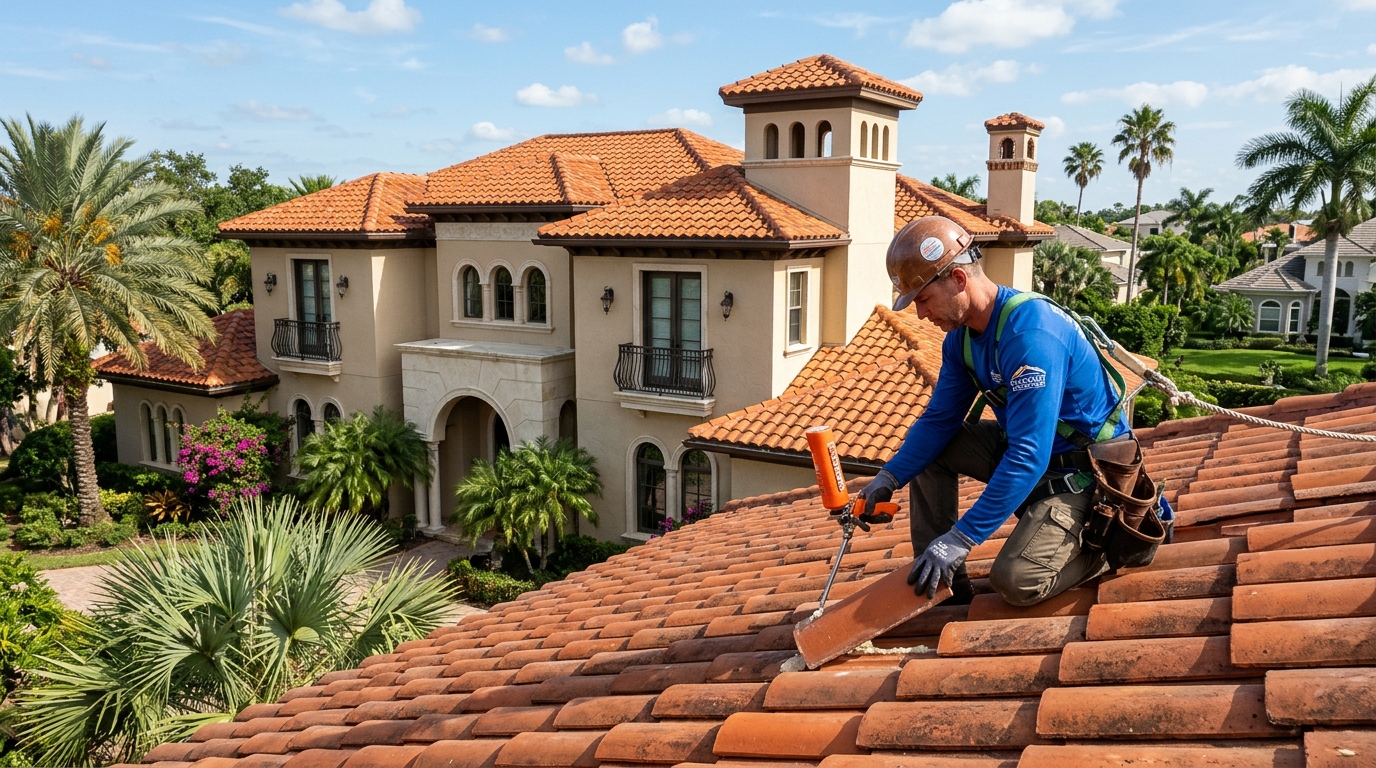
Under Minnesota State Building Code Chapter 1303 and MRC Chapter 9 (Roof Assemblies), asphalt shingles in high-wind zones must comply with ASTM D3161 Class F (110 mph) or ASTM D7158 Class H (150 mph) wind resistance. Following severe supercell storms or ice dam extraction, dispatched crews inspect the underlying deck for rot, replace waterlogged sheathing with exterior-grade APA-rated plywood, and install self-adhering polymer-modified bitumen underlayment (ASTM D1970) extending a minimum of 24 inches inside the interior warm wall line. Shingle rows are fastened with corrosion-resistant hot-dipped galvanized roofing nails utilizing an enhanced 6-nail per shingle pattern.

2. Historic Brick Chimney Step Flashing & Valley Seals

Historic Minneapolis Craftsman bungalows and Tudor revivals throughout Southwest Minneapolis and Minnetonka frequently suffer severe leaks at brick chimney intersections. Continuous freeze-thaw cycles cause mortar joints to crack and step flashing to detach. Emergency repair protocol involves cutting a clean reglet groove into the brick mortar line, installing heavy-gauge L-shaped step flashing interlaced with each shingle course, and seating a continuous counter-flashing bib sealed with elastomeric polyurethane expansion caulk. Valleys are stabilized using ice-and-water membranes topped with 26-gauge W-valley metal flashings to channel melting lake snow safely into downspouts.

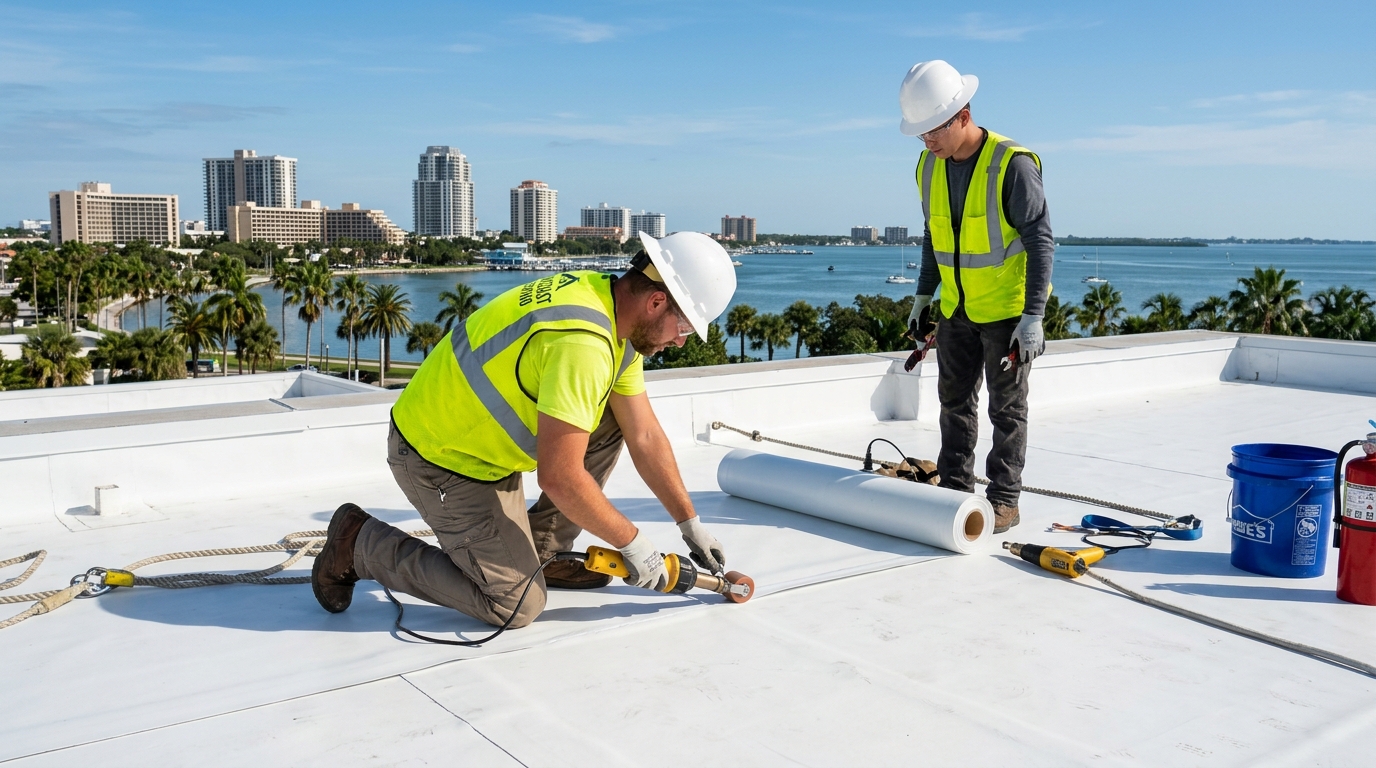
3. Commercial Low-Slope & Flat Systems (EPDM, TPO & Mod-Bit)

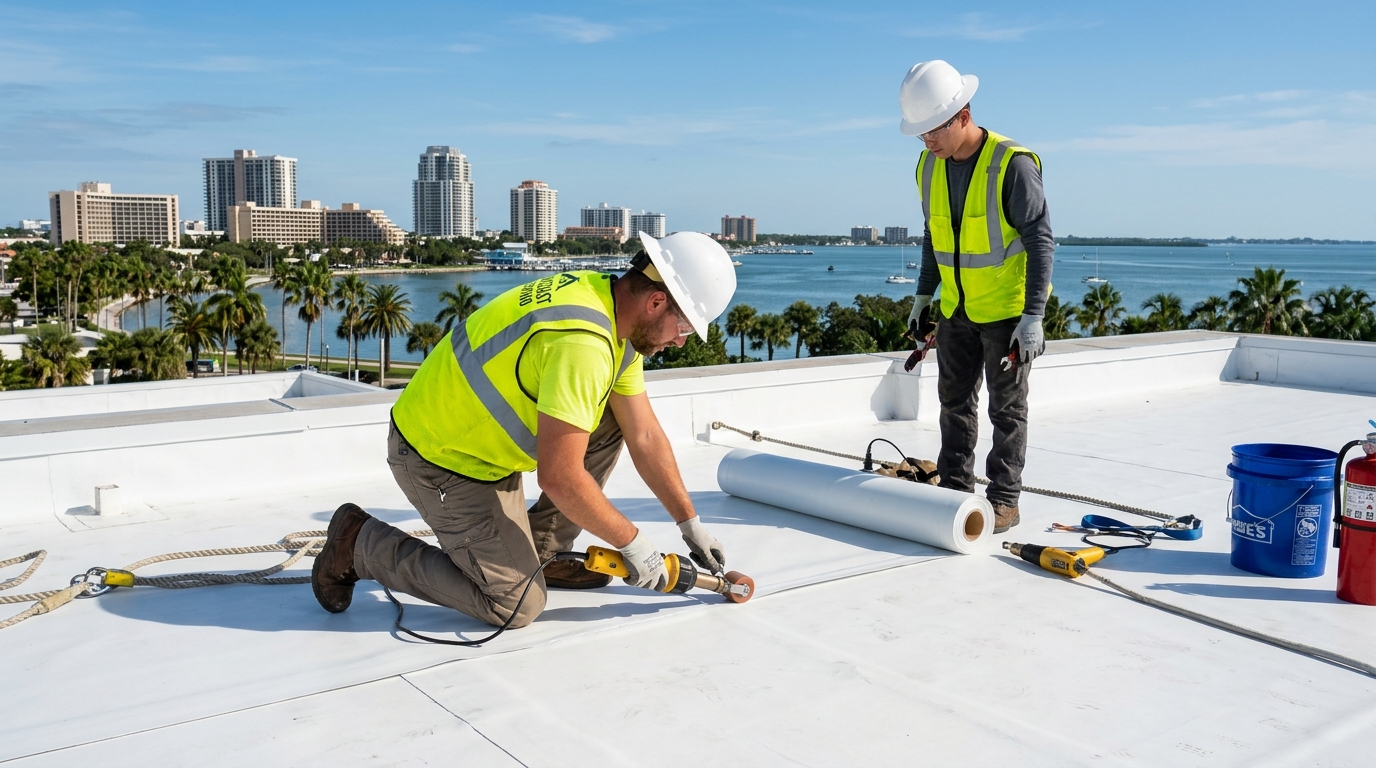
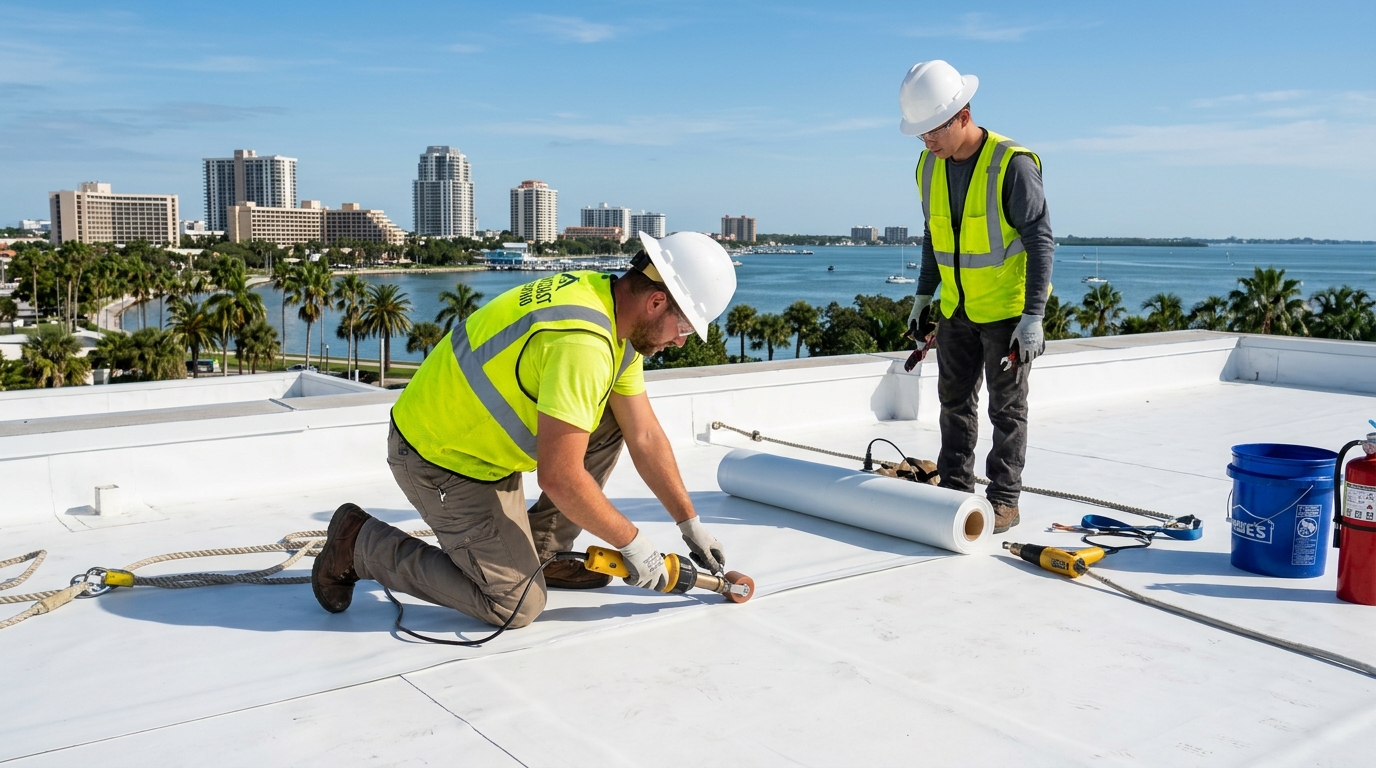
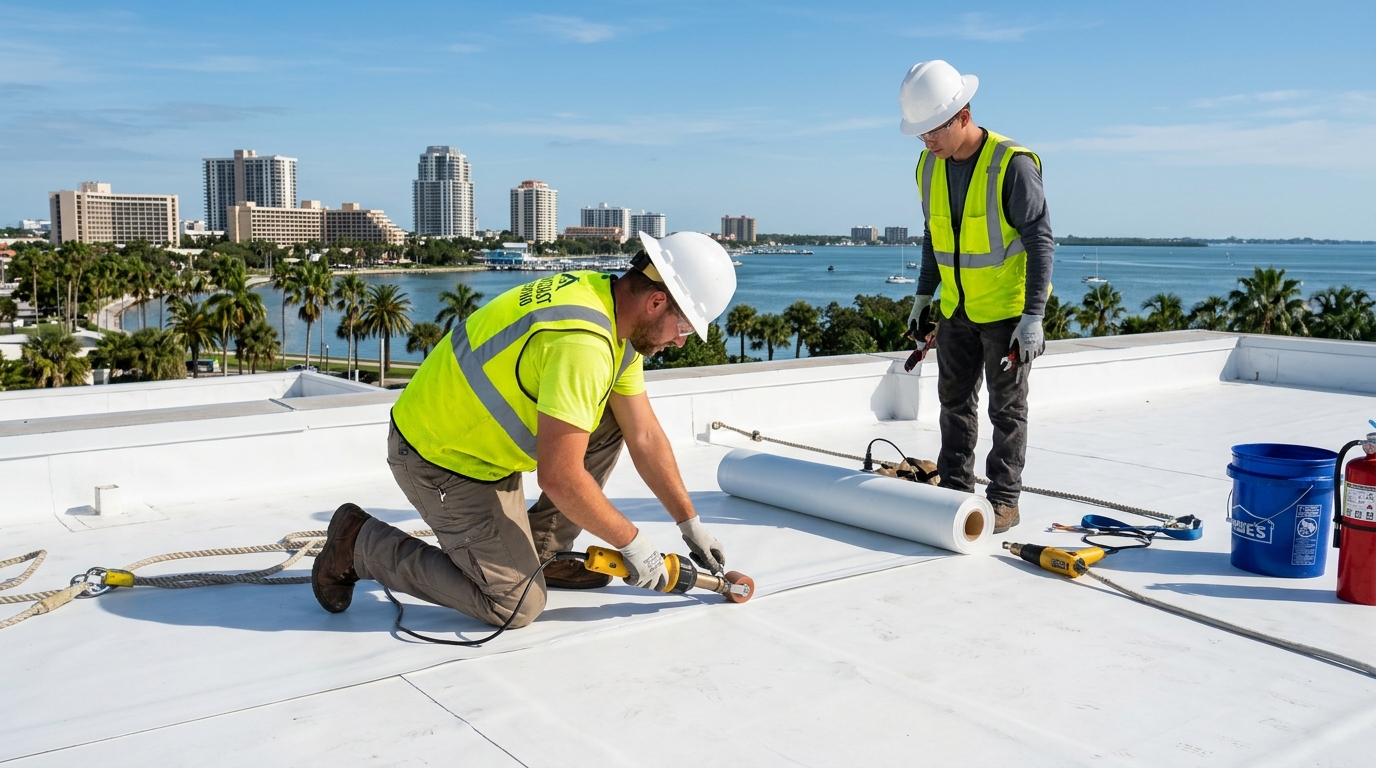
Commercial facilities throughout Downtown Minneapolis, the North Loop, Plymouth industrial parks, and Bloomington commercial corridors feature low-slope roofs vulnerable to severe snow accumulation and internal drain freeze-ups. Dispatched commercial crews utilize high-frequency moisture scanners to trace ponding intrusion beneath ballast rock, re-weld separated TPO seams with hot-air robotic welders, and apply emergency elastomeric mastic patches over punctured EPDM rubber membranes to stop water intrusion into commercial facilities.
The Minneapolis 4-Stage Emergency Deployment Methodology

From your initial emergency call to final physical stabilization, our coordinated dispatch system operates with military precision to protect your home from devastating secondary water damage:

01

Live Phone Triage

A trained technical coordinator assesses the active leak volume, roof pitch, building type, and electrical shock hazards over the phone at (888) 208-4155.

02

Crew Mobilization

The nearest licensed on-call Hennepin or Ramsey County roofing crew is dispatched with a 45–90 minute target arrival window, stocked with tarps, battens, and steamers.

03

Physical Mitigation

Crews establish OSHA-compliant tie-offs, apply commercial low-pressure steam or anchor heavy 10-mil battens, and verify water stoppage with FLIR thermal imaging.

04

Damage Documentation

Homeowners receive an exhaustive digital report with timestamped photographs, moisture readings, and itemized scope of work for insurance claim submission.

Professional Emergency Dispatch vs. Unlicensed Storm Chasers

Evaluating the critical engineering differences between verified Roof Expert USA contractor dispatch and hazardous DIY or storm-chaser practices:

Technical Protocol Roof Expert USA Emergency Dispatch DIY / Unlicensed Storm Chasers
Ice Dam Removal Method Commercial low-pressure high-heat steam extraction (zero deck trauma, preserves shingle integrity) Hammers, hatchets, salt socks (punctures shingles, ruins granules, voids manufacturer warranty)
Tarp Securing Standard Heavy-duty 10-mil woven UV-treated poly mechanically secured with continuous 2x4 lumber battens Thin blue poly with bricks/bungee cords (blows off in 30 mph lake gusts, tears gutters)
Moisture Tracing Diagnostic Calibrated FLIR E8 thermal imaging cameras and non-invasive pinless electronic moisture sensors Visual guesswork; punctures drywall blindly, missing hidden moisture tracks along rafters
Contractor Licensing & Insurance 100% verified Minnesota DLI licensed residential roofers with + general liability and workers' comp Unlicensed out-of-state storm chasers with no local accountability or workers' compensation
Insurance Claim Support Comprehensive photo grid, itemized Xactimate-compatible scope of loss, and adjuster support Handwritten invoices lacking hail test squares or moisture logs, resulting in claim denials
Ice Dam Removal Method
DIY / Unlicensed Approach Hammers, hatchets, salt socks (punctures shingles, ruins granules, voids manufacturer warranty)
Roof Expert USA Protocol Commercial low-pressure high-heat steam extraction (zero deck trauma, preserves shingle integrity)
Tarp Securing Standard
DIY / Unlicensed Approach Thin blue poly with bricks/bungee cords (blows off in 30 mph lake gusts, tears gutters)
Roof Expert USA Protocol Heavy-duty 10-mil woven UV-treated poly mechanically secured with continuous 2x4 lumber battens
Moisture Tracing Diagnostic
DIY / Unlicensed Approach Visual guesswork; punctures drywall blindly, missing hidden moisture tracks along rafters
Roof Expert USA Protocol Calibrated FLIR E8 thermal imaging cameras and non-invasive pinless electronic moisture sensors
Contractor Licensing & Insurance
DIY / Unlicensed Approach Unlicensed out-of-state storm chasers with no local accountability or workers' compensation
Roof Expert USA Protocol 100% verified Minnesota DLI licensed residential roofers with + general liability and workers' comp
Insurance Claim Support
DIY / Unlicensed Approach Handwritten invoices lacking hail test squares or moisture logs, resulting in claim denials
Roof Expert USA Protocol Comprehensive photo grid, itemized Xactimate-compatible scope of loss, and adjuster support

Full-Scope Emergency Roofing Services in Minneapolis, MN

Explore our specialized emergency service modules. Each offering is delivered by on-call Minnesota DLI licensed contractors equipped for harsh winter conditions and severe convective hail storms:

Active roof leak water containment in Minneapolis
24/7 ACTIVE STOP

Emergency Roof Leak Repair

Rapid tactical response for active water pouring through ceilings, waterlogged attic insulation, and valley freeze breaches.

Read Technical Leak Repair Protocols →
Post-storm heavy tarping with timber battens in Minneapolis
HURRICANE-STRENGTH TARP

Emergency Roof Tarping

Heavy 10-mil woven poly membranes secured with mechanical wood battens engineered to resist 60+ mph prairie wind gusts.

Read Structural Tarping Engineering →
Hail storm damage roof inspection and insurance claim prep
INSURANCE CLAIM PREP

Hail Storm Damage Inspection

Exhaustive 10x10 test square documentation, fiberglass shingle mat bruise identification, and adjuster scope preparation.

Read Hail Diagnostic Standards →
Chimney flashing step flashing repair in Minneapolis
MASONRY CRICKET SEALS

Chimney Brick Flashing Repair

Reglet mortar joint cutting, copper and galvanized counter-flashing bib installation, and masonry cricket diversion seals.

Read Chimney Flashing Methodology →
Skylight and pipe boot flashing restoration in Minneapolis
PENETRATION RESTORATION

Skylight & Pipe Boot Collar

Replacement of dry-rotted plumbing vent collars with Arctic-rated silicone gaskets and perimeter skylight curb flashing renewal.

Read Penetration Sealing Standards →
Commercial flat roof ponding and membrane repair in Minneapolis
COMMERCIAL DRAINAGE

Flat Roof Ponding & Seam Repair

High-frequency moisture detection, frozen internal drain thawing, and hot-air robotic seam welding for commercial TPO/EPDM roofs.

Read Commercial Membrane Protocols →

Twin Cities Regional Dispatch Hubs & Suburb Coverage

Our network maintains rapid-response on-call roofing crews strategically stationed across Hennepin, Ramsey, and Dakota counties to achieve guaranteed 45–90 minute arrival windows:

Plymouth, MN → Severe convective hail swath containment, eave steam ice dam extraction & timber tarping. Maple Grove, MN → Post-derecho wind blow-offs, shingle sheathing recovery & structural emergency tarping. Minnetonka, MN → Lakefront multi-gable thermal tracing, heavy snow load clearing & architectural valley sealing. Bloomington, MN → Commercial low-slope ponding mitigation, residential shingle tab tears & gutter freeze relief.
Explore All Twin Cities Coverage Communities & Municipalities →

Twin Cities Emergency Roofing: Frequently Asked Questions

Get clear, factual technical answers regarding active leak triage, Minnesota ice dam removal, insurance coverage, and contractor licensing:

Water Leaking Into Your Minneapolis Home Right Now?

Do not let frozen eave ice dams or hail fractures destroy your ceilings, insulation, and hardwood floors. Speak directly with an on-call Twin Cities dispatch coordinator right now. Strictly 0 web forms — direct phone-to-crew connection:

CALL NOW — (888) 208-4155
Available 24/7/365 • Rapid On-Call Dispatch Across Hennepin & Ramsey Counties